Webb Telescope Discovers Six Rogue Worlds
Unveiling New Insights into Celestial Formation Processes

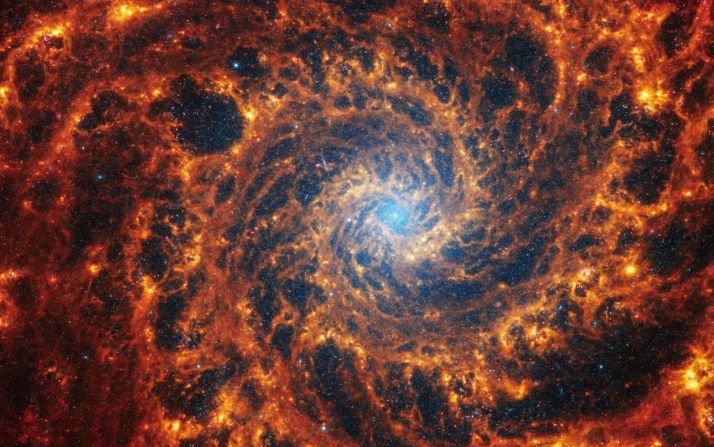
James Webb representationg of newly formed Galaxies
).png)
F. Schubert
A humanist first, passionate about human interactions, AI, Space, Human Life and a DJ. 20 year experienced in Team Management in BBAS3 and also founder of Estudio1514.com. São Paulo, Brazil based.


Resumo
Astronomers have recently identified six rogue worlds using the advanced capabilities of the James Webb Space Telescope. These celestial bodies, which do not orbit stars, provide valuable insights into the formation of stars and planets across the universe.
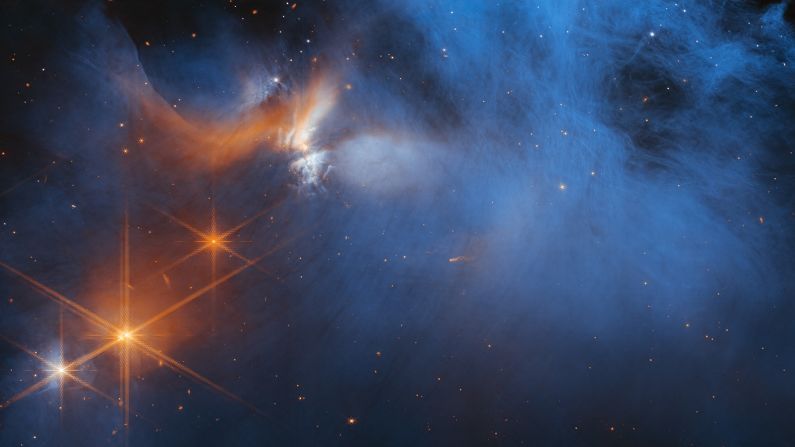
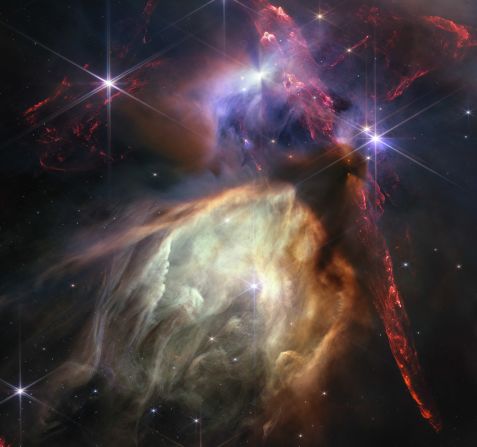
The observations were made in a star-forming nebula known as NGC 1333, located approximately 960 light-years away within the larger Perseus molecular cloud, which consists of gas and dust. The turbulence within this nebula plays a significant role in star formation by creating knots that collapse under gravity, leading to the birth of new stars.
The James Webb Space Telescope's Unique Perspective
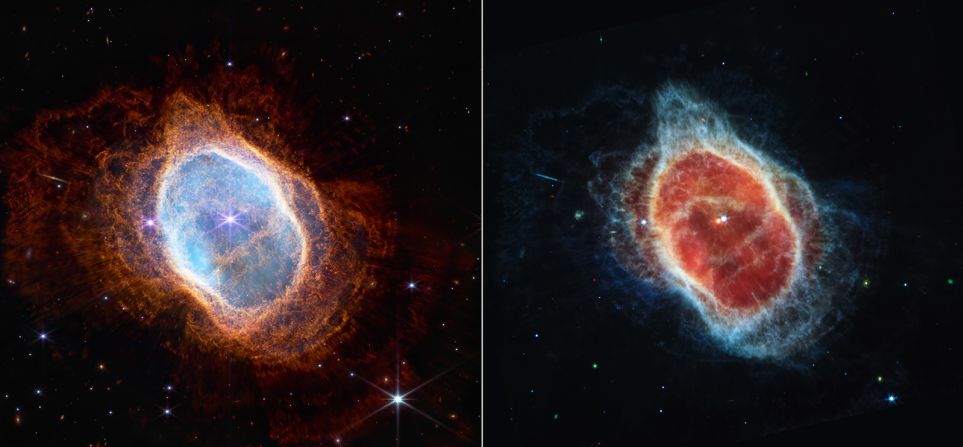
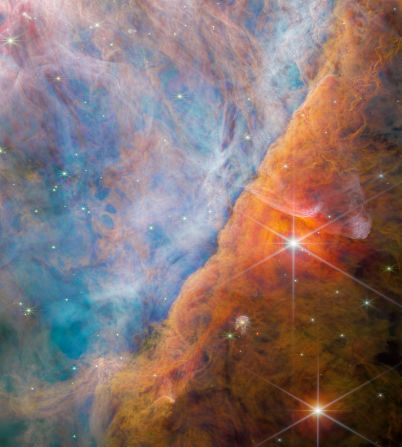
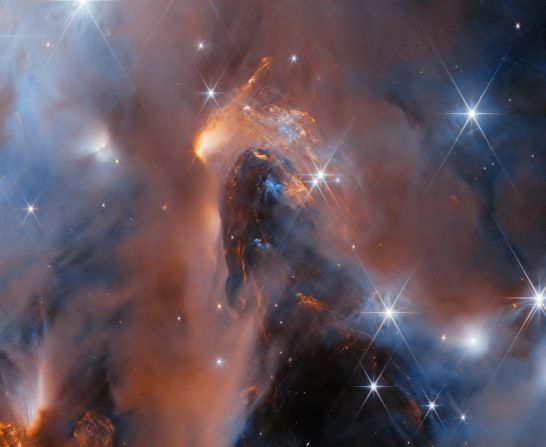
The James Webb Space Telescope (JWST) has produced stunning images of NGC 1333, revealing details obscured by dust in previous observations from the Hubble Space Telescope. Webb’s ability to observe in infrared light allows it to penetrate this dust and capture the ongoing star formation processes more clearly.
Within this nebula, astronomers discovered newborn stars, brown dwarfs, and other objects with planet-like masses. Each of these cosmic entities is approximately five to ten times more massive than Jupiter. Notably, these lower-mass objects were formed through processes typically associated with larger stellar formations, suggesting a broader range of mechanisms at play in the universe’s creation of celestial bodies.
According to Ray Jayawardhana, provost and astrophysicist at Johns Hopkins University, “We used Webb’s unprecedented sensitivity at infrared wavelengths to search for the faintest members of a young star cluster, seeking to address a fundamental question in astronomy: How light an object can form like a star?” The findings indicate that the smallest free-floating objects capable of forming similarly to stars also overlap in mass with giant exoplanets.
Understanding Stellar Formation
The research sheds light on how various stellar objects originate. Traditionally, stars emerge from clouds of gas and dust, with any leftover material contributing to planet formation. However, it has become increasingly evident that certain celestial bodies can develop akin to planets.
Jayawardhana asserts, “Our observations confirm that nature produces planetary mass objects in at least two different ways — from the contraction of a cloud of gas and dust, the way stars form, and in disks of gas and dust around young stars.” This dual-path formation process broadens our understanding of how celestial systems can develop over time.
One notable discovery involved an object estimated to possess a mass equivalent to five Jupiters, or roughly 1,600 Earths. Observations revealed a dusty disk surrounding this object, indicating formation processes similar to those of a star. Given that such disks often lead to the creation of planets, it raises intriguing possibilities about the potential for this object to spawn “mini” planets.
The Potential for Miniature Planetary Systems
Researchers have speculated that “tiny objects with masses comparable to giant planets may themselves be able to form their own planets,” as stated by study coauthor Aleks Scholz from the University of St. Andrews. This observation points to the possibility of a miniature planetary system emerging from these newly identified rogue objects, offering a fascinating parallel to our solar system but on a smaller scale.
The team also utilized JWST to examine the nebula in intricate detail through infrared light, leading to the identification of a rare occurrence: a brown dwarf accompanied by another object with a planet's mass. As Jayawardhana elaborates, “It’s likely that such a pair formed the way binary star systems do, from a cloud fragmenting as it contracted.”
Diversity in Celestial Systems
The remarkable diversity of systems identified through this research prompts scientists to refine existing models of star and planet formation. As astronomers continue their investigations, they seek to understand how rogue worlds evolve and whether these planet-like bodies initially form around stars before being ejected due to gravitational interactions with other cosmic objects.
Interestingly, rogue planets are estimated to make up about 10% of celestial bodies observed in the nebula studied by JWST. Despite their presence in this region, these enigmatic objects are still regarded as relatively rare throughout the Milky Way, prompting further inquiry into their characteristics and behaviors.
Looking Ahead
Future research is set to expand upon these findings, as the team plans to utilize JWST to investigate additional rogue worlds and explore the possibility of them fostering their own mini planetary systems. Furthermore, the upcoming launch of NASA's Nancy Grace Roman Space Telescope in May 2027 is expected to significantly enhance our knowledge of these nomadic worlds, potentially uncovering hundreds of rogue planets and unraveling their secrets.
FAQs
What are rogue worlds? Rogue worlds, or rogue planets, are celestial bodies that do not orbit any star. They are free-floating and can form through various processes.
How does the James Webb Space Telescope differ from Hubble? The JWST specializes in observing in infrared light, allowing it to see through dust clouds that obscure visibility for telescopes like Hubble.
What implications do these findings have on our understanding of planet formation? The discovery of rogue worlds suggests multiple pathways for celestial formation, expanding our comprehension of how planets and stars come into existence.
What future studies are planned regarding rogue planets? The research team intends to employ JWST for further study of rogue worlds, while NASA's upcoming Roman Space Telescope aims to identify even more of these cosmic objects.
The discoveries made by the James Webb Space Telescope concerning these rogue worlds challenge conventional theories on stellar formation and encourage a reevaluation of the complex processes that govern the universe. The exploration of these cosmic anomalies paves the way for enhanced understanding, illustrating that our view of the cosmos is ever-evolving.